I’ve written three novels from the perspective of spies. In these books, we get inside the spies’ heads, and we see normal people at a kind of distance – as if spies are separate from our world in some way. Which they are. You and I don’t factor much in spies’ thoughts. They are entirely focused on terrorists, foreign spies, international governments, illegal activity, and war. In a perfect world, those of us who don’t fit any of those descriptions would never knowingly encounter someone from their world. But just now and then, because of fate or very bad luck, normal people do find themselves stepping through that looking glass. And when our world collides with that of the spies, trouble often follows.
Part of the problem is their disproportionate power. When you think about it, spies have access to infinite information. They know everything about us, and we don’t even know their real names. Because of that, they can manipulate us with ease. I know this personally because, for five years I worked with spies in counter-terrorism communications. I had no background in espionage at all – I’d been a crime reporter before that. An acquaintance had offered me the government job at just the right moment, and I took it. But back then, I didn’t fully understand what working with spies would mean. But I would soon learn.
The first thing that happened was I met a young woman in the office who was new, like me. We kept running into each other in the coffee shop and on the bus, and naturally began hanging out together. The office building was huge and lonely, and I was pleased to have made a friend. She was funny and quick, and asked a lot of questions about my family and my past. I happily chatted away. Until, after a couple of weeks, she disappeared. Her email didn’t work, her phone rang out. No one in the office seemed ever to have met her. It was as if I’d been friends with a ghost. Months went by before someone told me the truth: she had been part of my background security check. Just one last test to make sure I was who I said I was. I’d thought myself quite sophisticated, and yet she’d played me like a child.
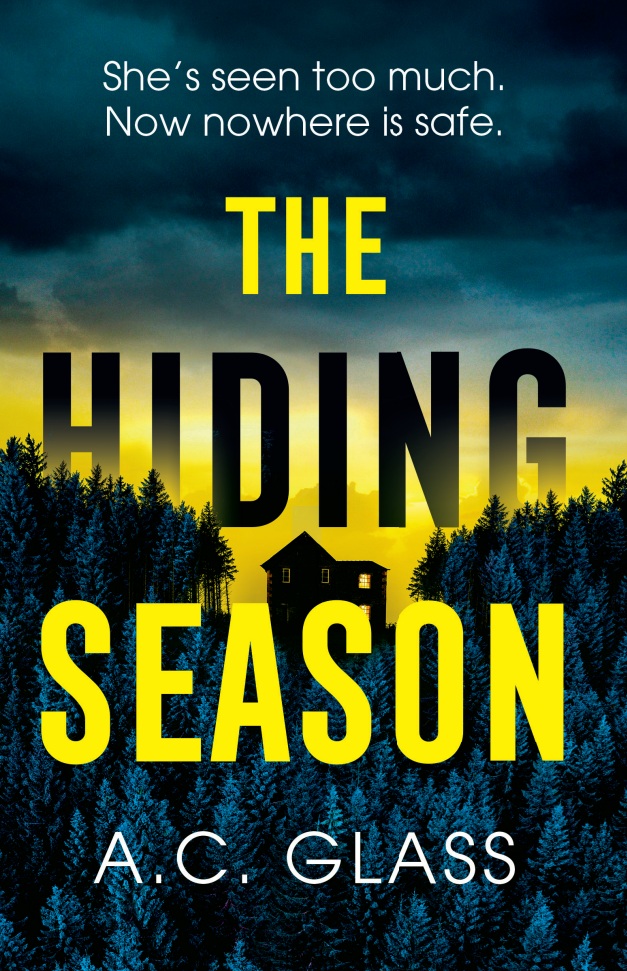
In The Hiding Season, I wanted to look at what that felt like. That encounter was my first inspiration. My second inspiration came from an old friend. A few years ago, she’d worked at a private ski resort in the American state of Montana. Like all such resorts, this one had a range of slopes, ski lifts, ski patrols, a café at the top of the highest peak… everything you might expect, save for one thing – it was solely for the use of the 45 families who owned very expensive lodges on the mountain.
During the ski season, the resort was busy, but that’s only two months every winter. For the rest of the year, it was empty. My friend often spent her entire day up on the mountain without seeing another person. At 8,000-feet elevation, her mobile had no signal. She was entirely cut off.
I used to tell her it would be an amazing place to commit a murder – there would be no witnesses, and the body wouldn’t be found for weeks. But at a resort like that, a murder victim is bound to be someone important – someone with power and influence. And anyone who kills someone with that much power will be very determined never to be found. That sort of killer wouldn’t allow the sole witness to survive.
Combining those two things – the power of spies and the power of wealth – I came up with The Hiding Season. It’s a book about what happens when we are overpowered. And how to know whether it’s time to run. Or to fight back.
The Hiding Season by Ava Glass (Penguin, £16.99) is published 26th March and available to buy online here.